Taxes included.
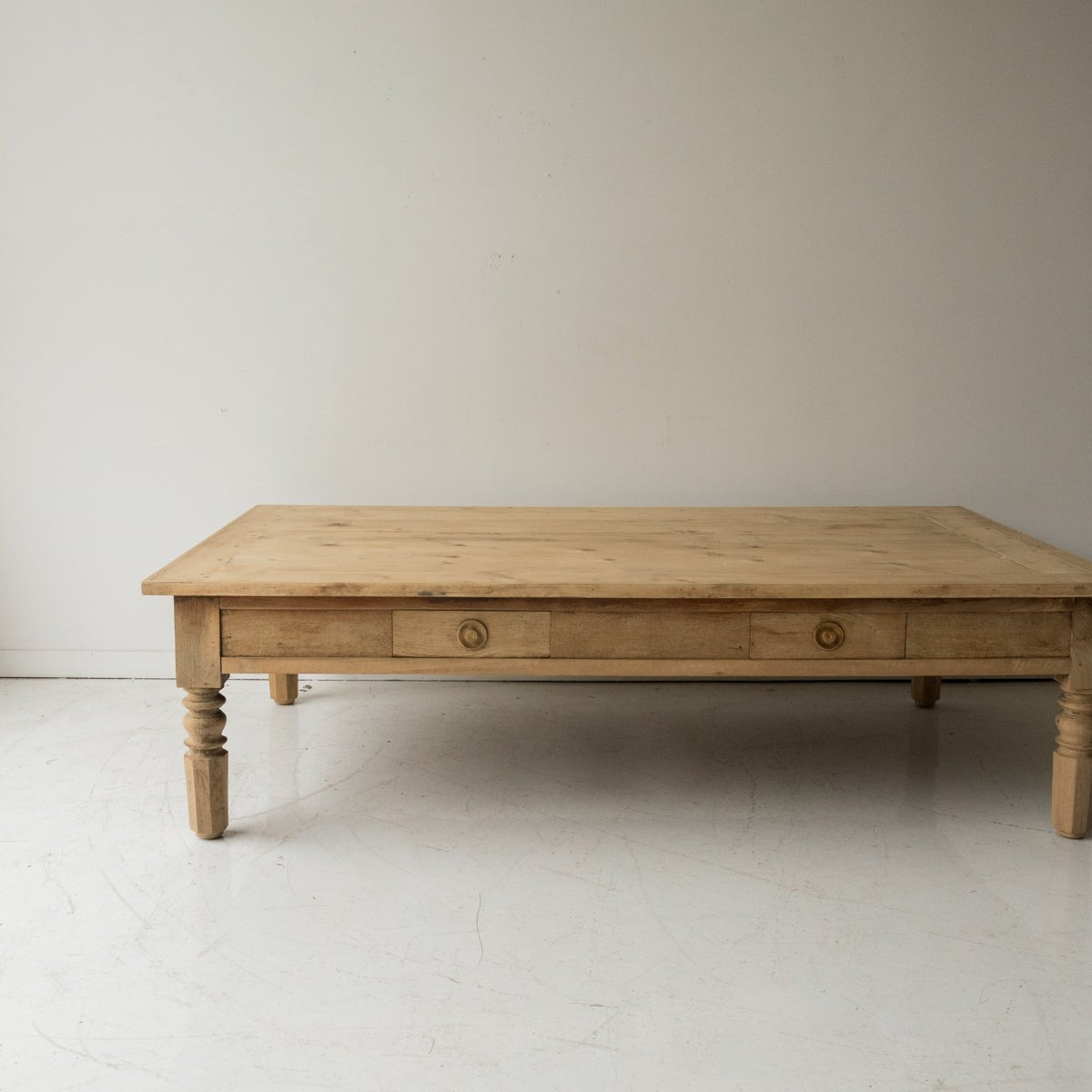
Grande Turned Leg Coffee Table
- Vintage.
-
Found in a flea market in Lyon.
- Oak base with pine top.
- Raw, dry finish.
- Two drawers in apron with wood knobs.
- Shipped via White Glove. Flat rate shipping charge of $199 applies for unlimited furniture items on your order.
- 79.25' L x 47.5' W x 22.25' H
Editor's notes
This table was once used in a French library. When we came upon it, it was a tall work table, but the feet were beyond repair. So we cut it down to coffee table height to make a one of a kind centerpiece for a sitting room arrangement.
The Coffee Table in Western Interior Design
From its earliest predecessors to its modern incarnations, the coffee table has become an essential anchor of Western interiors. Its origins trace back to the low ceremonial and dining tables of Asia and the Ottoman Empire—furniture forms that established the concept of gathering around a central, low surface. By the 17th and 18th centuries in Europe, tea culture shaped the design landscape, though tall tea tables still dominated. It wasn’t until the late Victorian era, as coffeehouses spread and domestic spaces became more relaxed, that low tables began to take root in homes.
The early 20th century marked the true emergence of the coffee table in Western design, driven by the rise of the modern living room and the need for practical surfaces near upholstered seating. Designers such as Edward William Godwin experimented with low furniture forms, paving the way for a new standard. By the 1920s and 30s, coffee tables had become commonplace, appearing in materials ranging from lacquered wood to chrome and glass.
The mid-century modern era cemented the coffee table as both functional furniture and sculptural art. Iconic pieces by Isamu Noguchi, Charles and Ray Eames, and Florence Knoll demonstrated a seamless blend of form and utility, influencing decades of design philosophy. As mass production expanded throughout the late 20th century, coffee tables became available in an ever-wider range of styles—from heavy oak to glamorous brass-and-glass constructions—making them accessible to households across socioeconomic levels.
In the 21st century, the coffee table continues to evolve with shifting lifestyles and aesthetics. Today’s designs emphasize versatility, sustainability, and bold personal expression. Lift-top mechanisms, hidden storage, recycled materials, and sculptural silhouettes reflect contemporary values and the ongoing role of the coffee table as a centerpiece of Western interior design.